



Climate protection, profitability, competitiveness: Canon in Poing strikes the perfect chord
How industry can combine sustainability and business success
While a Bertelsmann Foundation study reveals that sustainability transformation has stalled in many German companies, Canon Production Printing in Poing demonstrates the opposite: climate protection and business success are not mutually exclusive – provided that strategy, technology and commitment work in tandem.
Sustainability is losing momentum in German business. This is the finding of the Bertelsmann Stiftung’s Sustainability Transformation Monitor 2026, published in February 2026. According to the study, 59 per cent of the more than 800 companies surveyed from the real and financial economy now assign lower priority to climate protection than in the previous year. Uncertain regulatory frameworks and a lack of economic incentives are hampering progress in many organisations.
At Canon Production Printing in Poing, the situation is very different: here it becomes clear that climate protection and competitiveness can reinforce each other through targeted investment in CO₂ reduction, energy efficiency and renewable energy. “We were ahead of the curve in many areas – and today we are benefiting from this head start,” says Stefan Speer, responsible for electrical engineering at the site. “We are decarbonising faster than the industry average would suggest.”
Continuous CO₂ reduction: groundwater cooling in 1988, geothermal energy in 2012, green electricity since 2014
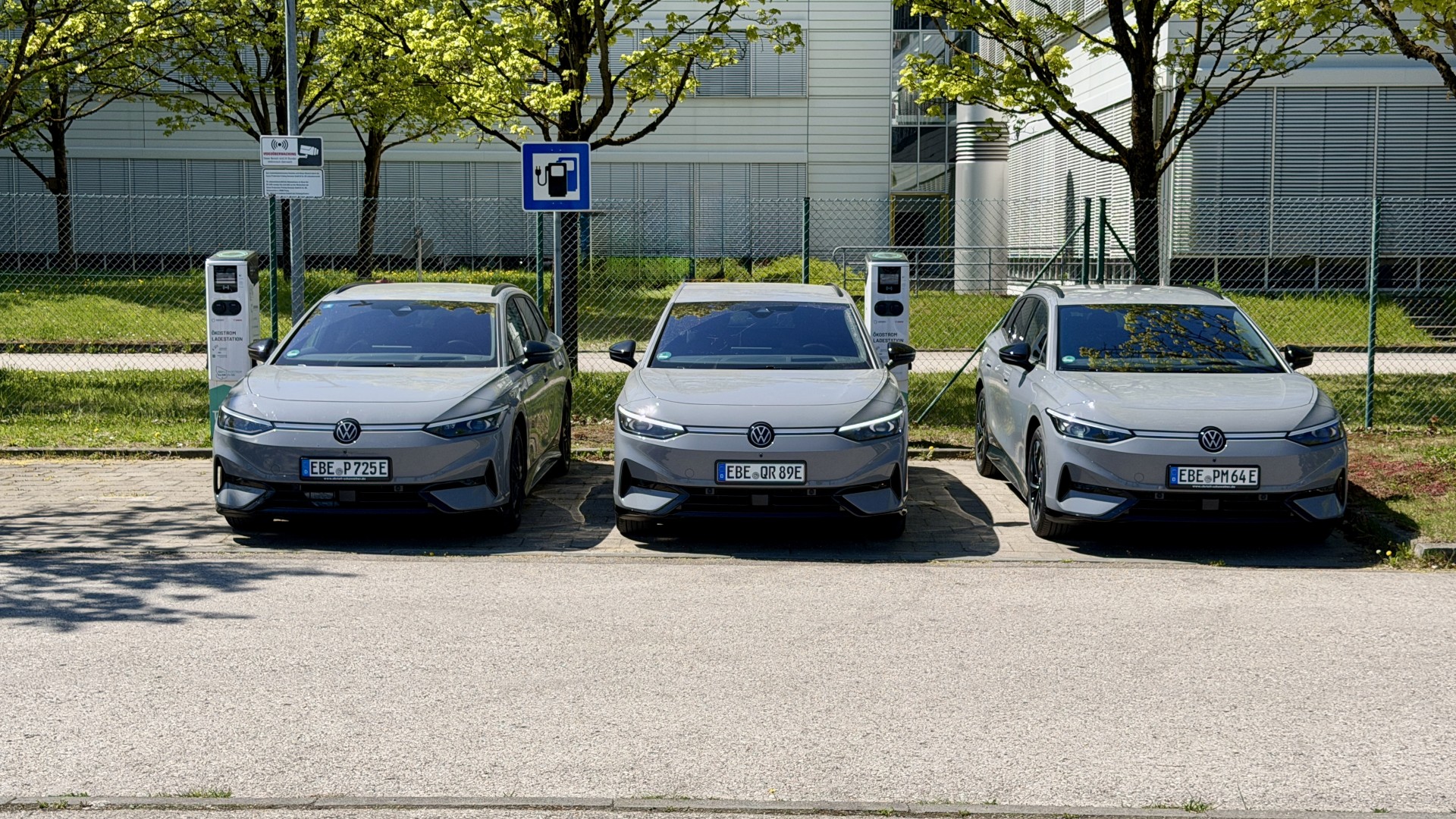
The framework for minimising CO₂ emissions is the international Greenhouse Gas Protocol, with its three emission scopes: Scope 1, 2 and 3. For Scope 1 – direct emissions from the company’s own facilities and vehicles – Canon has already largely transitioned to renewable energy sources. Machine, hall and office cooling has been provided by groundwater since 1988. Since 2012, deep geothermal energy supplies all heating requirements; only the operation of the heating plant generates minimal CO₂ emissions. The company’s fleet of 30 vehicles already includes 27 hybrid or fully electric models – with an upward trend: the remaining three diesel vehicles will be replaced by mid-2026.
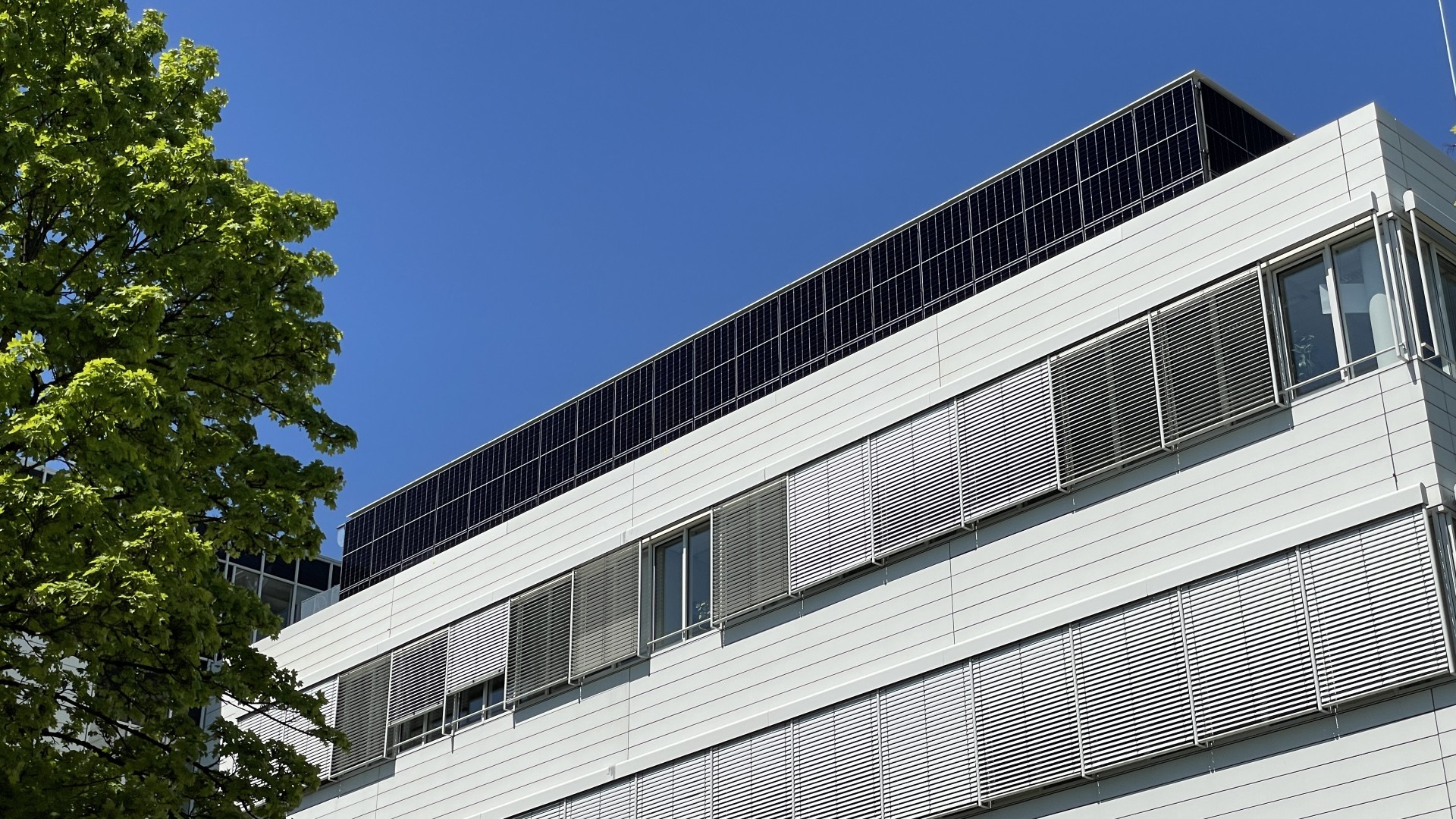
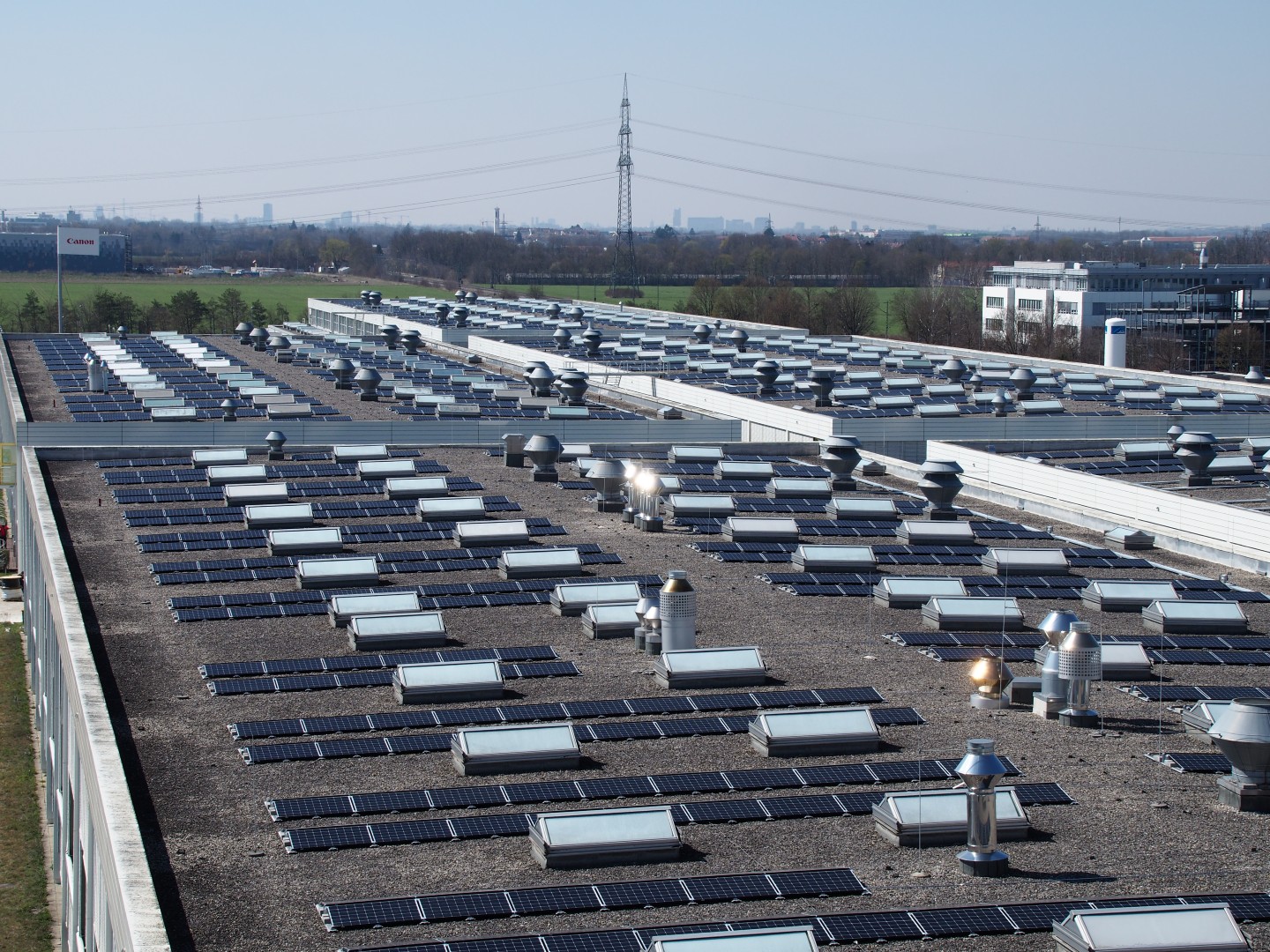
For Scope 2 – purchased energy – Canon has fully decarbonised its energy supply. This has been made possible in part by the site’s photovoltaic system, one of the largest installations in the Greater Munich region: 6,588 solar modules across factory roofs and facades deliver 2.2 megawatts peak (MWp) of installed capacity, covering 25 per cent of the site’s overall electricity requirements. The CO2 impact of the remaining electricity sourced has been compensated through green electricity certificates since 2014. All pumps in the cooling water system are likewise powered by green electricity. As a result, Canon’s Scope 1 and Scope 2 emissions are now at a very low level.
The printing systems developed and manufactured by Canon Production Printing are a major lever for CO₂ reduction (Scope 3). Here, Canon pursues a Reduce, Reuse, Recycle approach: from materials and manufacturing along the entire value chain, through energy‑ and resource‑efficient printing systems, to optimised service processes and intelligent device operation at customer sites.
Networks and Partnerships accelerate progress
Canon Production Printing is an active member of dekarbN, the decarbonisation network of the Research Centre for Energy Economics (FfE). Eleven leading industrial companies – including BMW, MAN and MTU – are working together on strategies to reduce CO₂ emissions. The exchange of experience on energy efficiency, waste heat utilisation and renewable energies is accelerating transformation in all participating companies.
Regional impetus for companies
With all these measures, Canon Production Printing is very well positioned to further advance its own decarbonisation. At the same time, the Poing site is sending strong signals that will inspire companies in the region in their sustainability transformation: climate protection, profitability and competitiveness can complement each other when strategic intent, technical solutions and long‑term thinking combine to drive real impact.