



Canon Production Printing in Poing Advances Electric Mobility with Solar-Powered Fleet
Poing, 12 June 2026 – Canon Production Printing in Poing is steadily advancing its commitment to electric mobility: more than a third of the company’s vehicle fleet is already fully electric – charged using solar energy from its own photovoltaic system, one of the largest installations in the Greater Munich region. Additional charging points, the procurement of further electric vehicles and regional green electricity are progressively reducing the site’s carbon footprint.
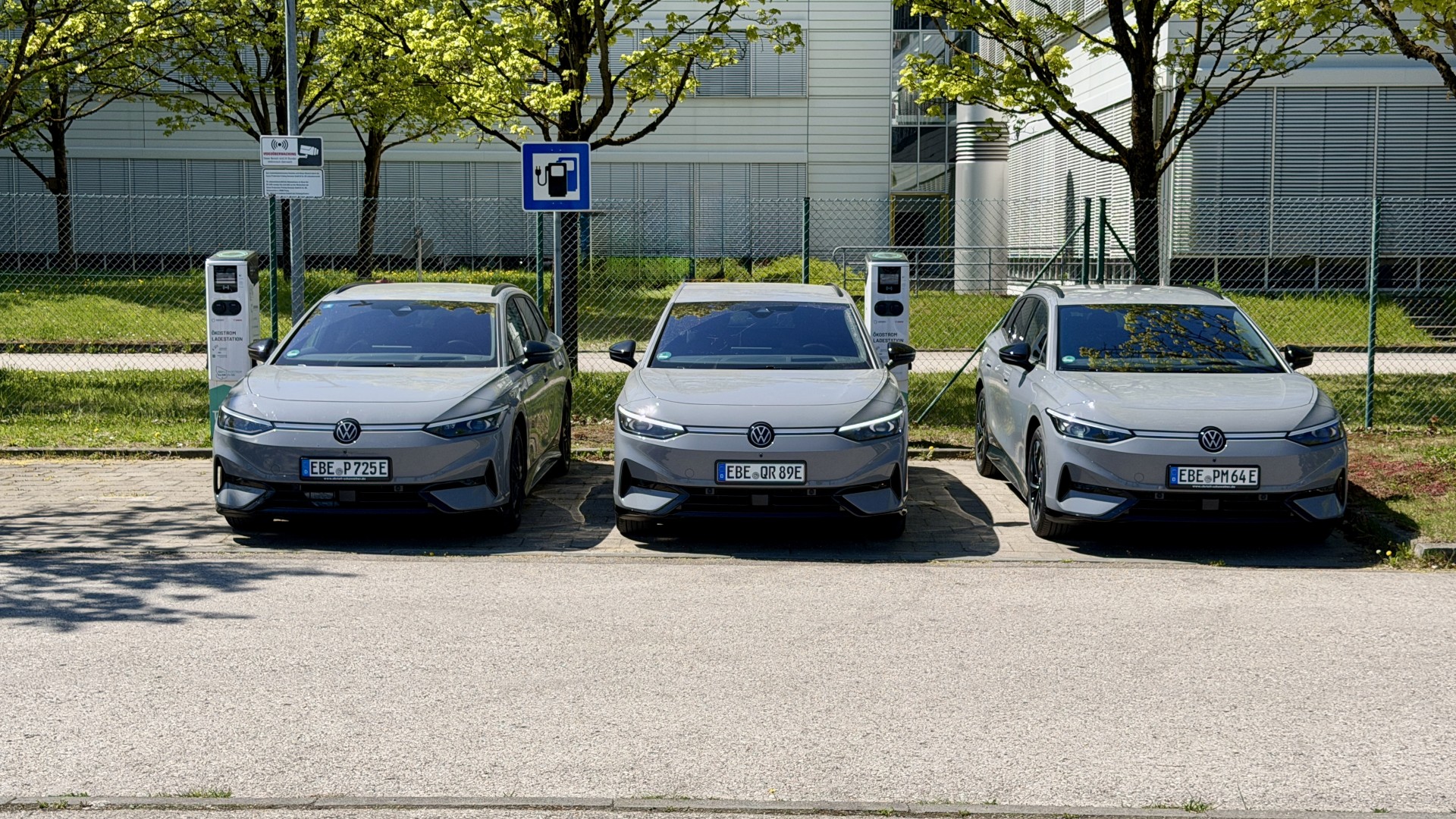
The transition to electric mobility at Canon’s Poing site is well underway. Of the current 30 company vehicles, 11 are already fully electric, 16 are hybrid and only 3 still run on diesel. Compared to February 2024, when only 4 electric, 25 hybrid and 6 diesel vehicles were in use, the gradual phase-out of combustion engine vehicles is clearly on track. By mid-year, a further three fully electric vehicles will be added, and the three pool vehicles will also transition fully to electric drive. “Every new vehicle acquisition is evaluated for real-world usability and must meet WLTP efficiency and consumption standards,” says Christine Sigllechner, Facility Services Specialist.
Solar-Powered Charging – Free of Charge for Employees
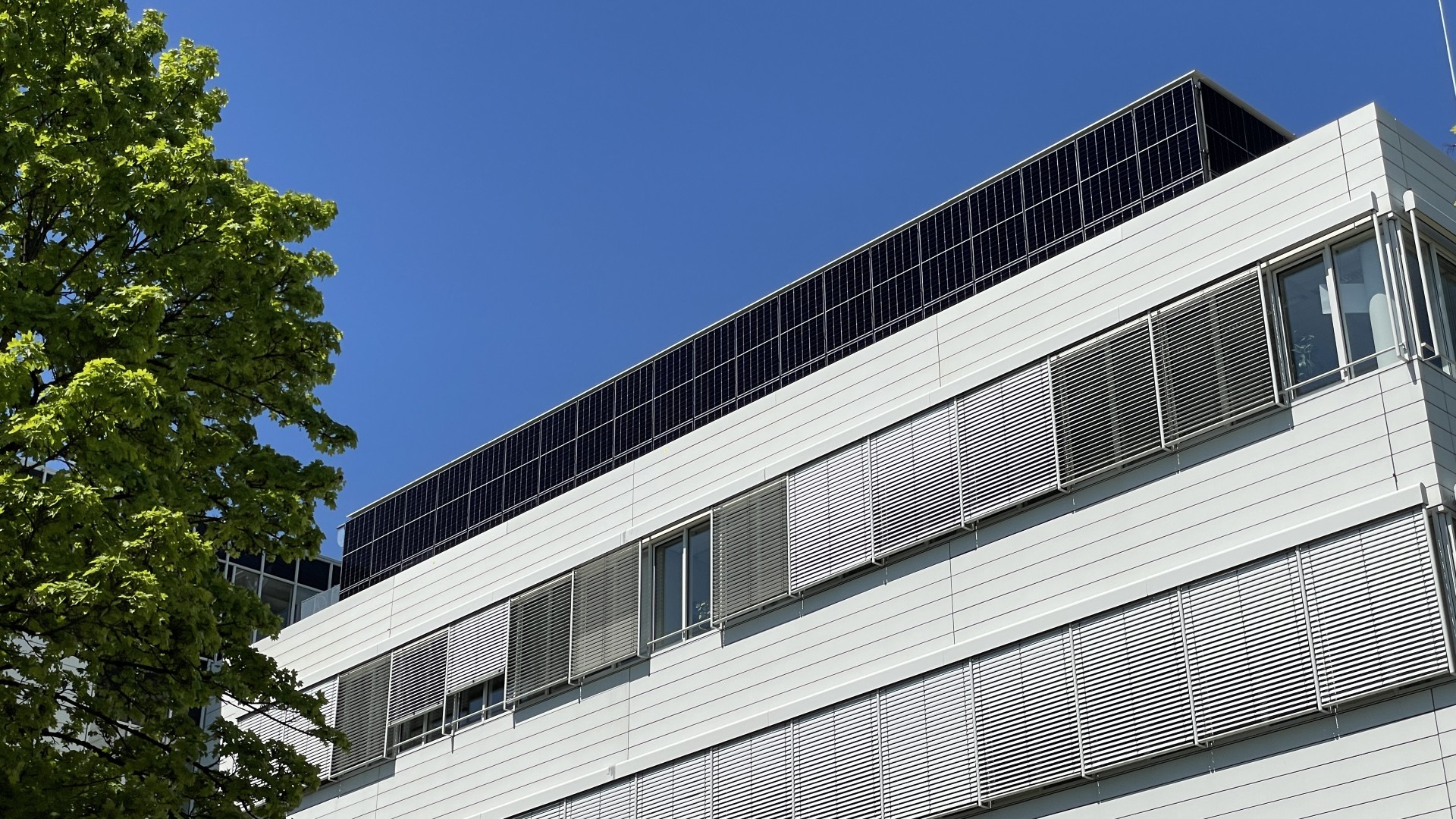
Across the roofs and facades of its factory buildings, Canon operates a photovoltaic system with an output of over 2.2 MWp, comprising 6,588 solar modules in total – covering around 25 per cent of the site’s overall electricity requirements. A share of this energy flows directly to charging points both on and off the factory premises – covering personally assigned company vehicles, shared pool vehicles and employees’ private electric vehicles. For employees, this charging service is provided at no cost.
62 Charging Points Already Installed
A total of 62 charging points are available across the site: 24 complimentary points in the staff car park and a further 30 on the factory premises for company vehicles. In addition, eight publicly accessible, fee-based charging points are located in the visitor car parks on Siemensallee. This infrastructure includes six standard AC chargers and one DC fast-charging station with two charging points.
Employees Embrace E-Mobility and Charging Services
“A glance at our car parks shows that the transformation has become part of everyday life: many employees already arrive at work in electric vehicles – partly because free charging for
cars, bicycles, scooters and motorbikes makes the switch viable for those without charging facilities at home,” says Stefan Speer from the Electrical Engineering department. “If this trend continues, many more colleagues will have made the switch to electric vehicles within just a few years.”
To ensure that all employees can charge their vehicles, they coordinate pragmatically via a Microsoft Teams group: anyone needing a charging space simply posts a quick message, and vehicles are moved flexibly – for example, one vehicle until midday, the next from midday until
4 pm.
Public Fast Charging for the Municipality of Poing
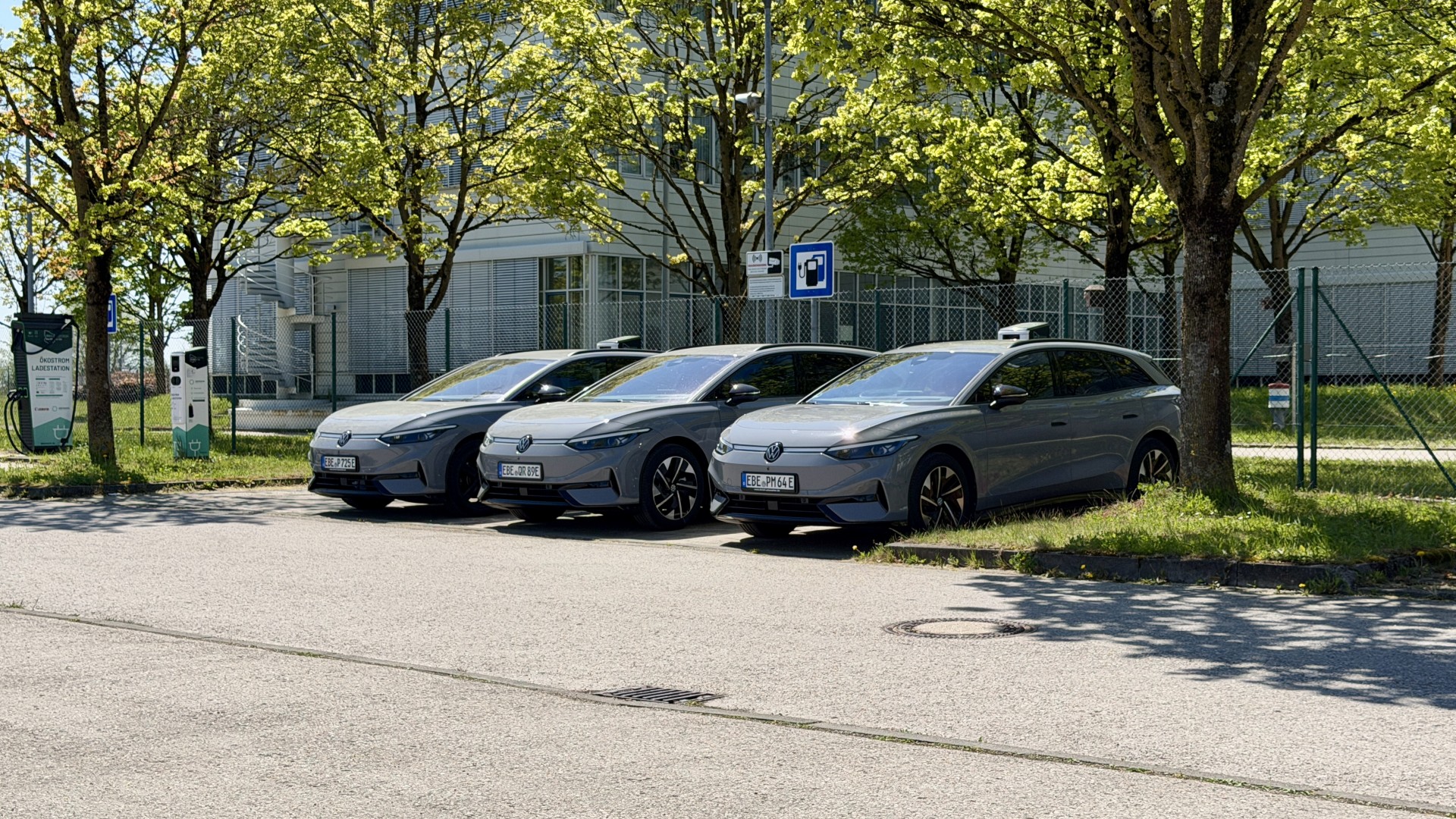
The publicly accessible fast-charging station on Siemensallee, commissioned on 1 September 2025, also supports the expansion of electric mobility throughout the municipality of Poing. The Alpitronic Hypercharger enables two vehicles to be charged simultaneously at up to 200 kW – bringing electric car batteries from 20 to 80 per cent charge in approximately 30 minutes.
Operated in partnership with EBERwerk, the station is accessible via standard charging apps and maps and is available around the clock. Notably, the electricity used for charging is sourced primarily from the Canon photovoltaic system – drivers charging here are running on regional green electricity generated on-site.
Driving Towards Climate-Neutral Operations
At Canon Production Printing in Poing, e-mobility and photovoltaics have long been integral to daily operations. Every battery charged, every combustion engine vehicle replaced and every kilowatt-hour of solar power generated contributes to Canon’s global commitment to achieving net-zero carbon emissions across its business operations by 2050 – while setting an example for climate-friendly mobility across the region.